

Following Tuesday's explanation of behavior modification, today I'll continue outlining different techniques for modifying your children's behavior. Keep in mind that you can use one technique alone or in combination, and that you must be firm in your decisions.
I hope you find them helpful.
THE TIME-OUT TECHNIQUE.
This technique represents a variation of the previous one insofar as it is a technique that It basically uses the withdrawal of attentionTherefore, many of the principles set out there are valid here, but with some nuances.
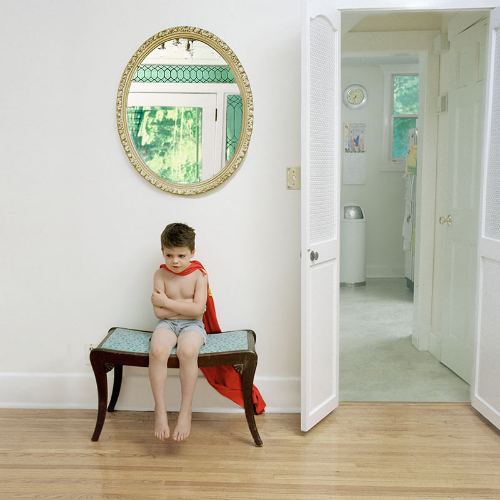
In the event of crying spells, tantrums, or more serious mischief (for example, when loss of control occurs), it can be used the "time out" techniqueThis involves physically removing the child from their current location and taking them to their room or another place for a short period of time. Alternatively, the parents may remove themselves from the child's location (when possible, e.g., in the dining room).

Let's look at some guidelines for proceeding appropriately:
- The site to which we temporarily remove it It should be a place where he/she has no access to games or other entertainment.It's not about finding him a hostile place, but a place that is boring with little chance of him being able to do anything to pass the time.
- We must ttransfer him immediately after the behavior appears or when it has reached an unsustainable point (for example, an argument between siblings that reaches a point of loss of control).
- Don't argue with himDo not resort to recriminations or derogatory terms like, "You're very bad and I'm going to punish you," or "I'm fed up with you, you're hopeless..." Instead, you can explain the reason for your exclusion in a calm but firm and assertive tone. To do this, state your complaint clearly: "Since you hit your little brother, you won't be able to play with him." Ignore any protests or promises. Remember to appear angry, but not out of control. The idea is to send a very clear message that he has done something wrong and that we are upset with him. In this regard, and very briefly, you could also say something like this (adjusting the message to the child's age): "You have disappointed me so much that I don't want to be with you right now. I feel very sad."
- Do not allow him to leave the isolation place prematurely. If he does, warn him of more negative consequences, such as having to stay in this situation for longer.
- The isolation period normally It is calculated based on one minute per year of the child with a maximum of 20 minutes. However, this should be evaluated by the parents. Longer periods are not recommended as they can produce the opposite of the behavior we want to eliminate.
- If, when we go to get him, he again engages in inappropriate behavior, we must warn him that if he wants to go out, he must refrain from doing so for at least 15 seconds. Stay firm in your decision. If you pass the test, the episodes are very likely to subside; if you give in, they will most likely increase.
- En in the event that it has caused damage to the interior of the passenger compartment (has messed up or broken something) must replace or correct it with some action before leaving.
- We must be careful that this physical withdrawal does not provide any kind of indirect benefit to the child. For example, if the child manages to stop studying or avoid eating something they don't like, we would be reinforcing the inappropriate behavior.
- This technique is usually
very effective if used properly and decisively.
- The effectiveness of this technique, regardless of the fact that we are withdrawing attention, lies in the fact that we are triggering, contingent upon the appearance of the unwanted behaviors, one of the most prevalent "childhood anxieties": separation anxiety. Even if the child is old enough to know that they will not actually be abandoned, reliving this anxiety can set off internal alarm bells. What they may now fear is not physical separation but emotional separation. Thus, the child will correct their current and future behavior not for the parents' reasons but for their own (fear of losing their parents' emotional support).
As with all techniques based on withdrawing attention, remember that moments of attention toward the child should be introduced contingent upon the appearance of desired behaviors. Verbal and physical reinforcement (praise, hugs, expressions of joy, giving a reward, etc.) is essential.
TOKEN ECONOMY. COST OF RESPONSES.
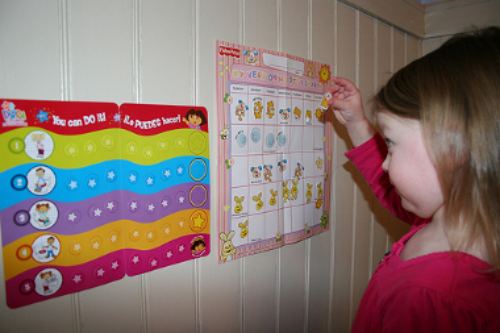
It doesn't help at all if the child easily receives gifts or toys despite exhibiting disruptive or disobedient behavior. As part of a more comprehensive treatment, the technique known as... "token economy" It usually works very well to regulate the reinforcements that the child receives. To win a prize (toy, trip to a theme park, excursion, etc…) must perform a series of desired behaviors (or stop doing others) that must be specified (behave well, obey, study, tidy up their things, etc…).

After performing this behavior, a reinforcer will be given immediately. (points, tokens…) that the child will collect until reaching a certain amount, at which point they will receive the final reward. Small, immediate rewards can also be agreed upon for certain desired behaviors while points are accumulated for the larger prize (delayed reinforcement). The important thing is to make the child realize that they gain greater benefits and privileges by behaving correctly.

Let's look at some key points for proper functioning:
- These prizes must be agreed upon in advance.Be clear and appealing to the child. Look for things they'll genuinely like (it's no use pretending they'll win something they need, like new pencils for school).
- Make sure that you can earn them more easily at first to motivate himThe awarding of these prizes should be accompanied by sincere praise such as "I'm very happy," "you're doing very well…," and, obviously, should never be accompanied by negative statements such as "let's see how long this lasts…" The younger or more restless the child, the shorter the periods in which the behavior is evaluated should be (promising something if they pass the course in three months will not work).
- In the case of hyperactive children, keep in mind that there is particular difficulty in postponing things. In all these cases, if a token is given as a reinforcer, it can be exchanged (at least initially) immediately for something the child wants (a small toy, sweets, etc.). The same procedure should be followed with children who have intellectual disabilities.
- It is important to create a list or poster where the status of points obtained and those needed to reach the prize can be visualized, when it is delayed according to the established plan. In case of The appearance of misconduct may also involve the removal of some of the points (cost of the response).
- Be consistent in applying this technique and don't get frustrated at the first setback. It takes time to change bad habits and there are no magic solutions.
- Remember that when giving instructions to your child, you should do so clearly and specifically, without contradictions, and in a way that is understandable for their age.Try not to do so accompanied by instigating physical contact (the use of instigation has proven to be a major enhancer of non-compliance).
These techniques are often very effective for managing behavior both at home and at school. The goal isn't for the child to learn to behave solely through rewards, but rather to initially give them reasons to change their behavior. The expectation is that, in the future, appropriate behaviors will be maintained not by rewards, but by what we call "natural reinforcers." For example, a child might initially refrain from certain disruptive behaviors to earn a reward, but this change in behavior can lead to better interactions with friends, and in the medium term, this becomes a more powerful reinforcer than the initial reward. Behaviors then become controlled by the positive consequences generated in their environment.
Sources:
- ZQUIERDO, A. (1988): Use of methods and techniques in behavior therapy, Promolibro.
- KOZLOFF, MA (1980): Learning and behavior in childhood. Problems and treatment, Fontanella.
- MARTOS, J. (1984): Parents also educate: a practical guide, APNA.
- RIBES, E. (1972): Behavior modification techniques. Their application to developmental delay, Trillas, Mexico.