
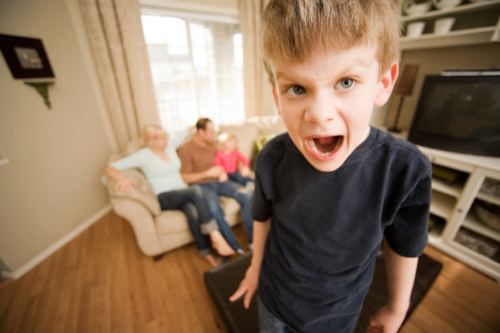
INTRODUCTION
If we want to change a inappropriate behavior or teaching something newThe first thing we need to do is identify it as objectively as possible. To do this, we must define it in specific terms that require minimal interpretation; that is, clearly, so that it can be observed (measured and recorded) by different people without the need for assumptions or subjective assessments.
We can analyze any behavior in the following way
Stimulus ⇒ Behavior ⇒ Consequence
Our behavior depends on the consequences we obtain from it. We use the medium to obtain positive, pleasant consequences and to avoid negative or unpleasant consequences. We will repeat behaviors that are followed by a reward and will not repeat those that do not provide pleasant consequences. Consequently, any attempt to eliminate or reduce a behavior that does not simultaneously reward incompatible behaviors will fail. Therefore, understanding the relationship between behavior and its consequences, the types of consequences, and how to use them is fundamental to ensuring effective teaching.
The consequences can be positive or negative. Consequences positive These are actions that, when applied immediately after a behavior, increase its frequency. They can include activities; games and toys; attention, praise, smiles, a person's favorite foods or drinks; etc. Generally, when a person receives positive consequences, they feel loved and their self-confidence increases.
Consequences negative These are consequences that, when applied immediately after a specific behavior, decrease or eliminate the occurrence of that behavior. These consequences (loss of attention, removal of favorite toys, "no going to the pool—which they love—", "no going to the movies", etc.) should always be applied first, and punishment should only be used in absolutely necessary situations.
Let's look at an example: “According to his parents, Gonzalo is a difficult child. When they are at the table, he swears, and the more they insist he be quiet, the more he swears, the longer he swears, and the louder he swears. His parents decide that every time Gonzalo swears, they will turn their backs on him and only pay attention to him when he stops. Gonzalo continues swearing for a few days, but then he stops.”
The techniques described below are based on the principles of Behavior ModificationThis field of psychology, based on the systematic study of animal learning, has contributed numerous effective techniques for establishing, correcting, or modifying behavior in children and young people. These techniques have been successfully applied in different fields, situations, and with various individuals, including both the general population and those with severe disorders.
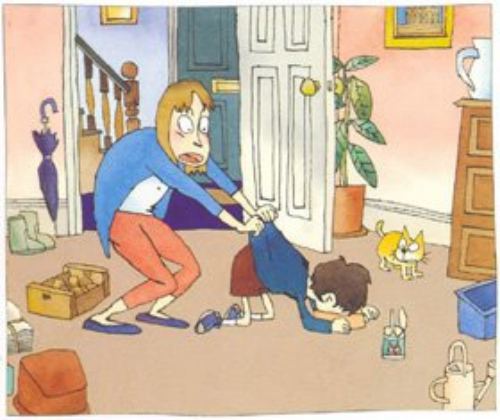
Withdrawal of Care
I sincerely believe that it is one of the more effective techniques for controlling children's behavior, especially for those behaviors that manifest themselves with tantrums, meltdowns, crying, but without aggressive manifestations.
The technique could not be simpler in its conception: It is about, when faced with manifestations of screaming, tantrums or other, automatically ceasing to pay attention to the child. This way of acting is justified under the hypothesis The child may be exhibiting such behavior to assert certain demands or to attract the adult's attention. The child may be accustomed to getting what they want through this behavior (positive reinforcement). Thus, they may have learned that if they make any request accompanied by crying or tantrums, their parents' attention is much greater and their requests are met more quickly. This can become a habit, a vicious cycle that creates distress within the family.

Before implementing this technique, it is necessary to analyze the situation calmly and verify that the child's behavior is actually a response to the perceived need for attention. To do this, we can assess how we react to the demand, when it occurs, and what happens. Do we give the child the attention and time they need? Do we usually give in to their demands? Do we frequently speak to them when they behave "well" to praise and reward them, or only when we punish them? Episodes of tantrums, disobedience, etc., are largely learned, and therefore, we can unlearn them.
This technique It is not applicable to behaviors that involve strong aggression. Verbal or physical abuse, including episodes of throwing objects, or, in general, any behavior that poses a potential danger to the child or others. In these cases, always consult a specialist before taking action.
To use the technique, we must be clear about the objectives and the method we should use:
1. OBJECTIVE: Teach the child that making requests inappropriately (tantrums, crying, etc.) will not get them anything.
2. METHOD: If we withdraw the attention we give to the child (positive reinforcement) immediately after the inappropriate responses appear, these will tend to disappear.
3. FORM: How should it be done?
When inappropriate behaviors appear, act in the following way:
1. Withdraw attention immediately.
Avoid eye contact or making any reproachful remarks, words, or gestures. as if the behavior were not happening (except in the behaviors mentioned above that could pose a danger to the child or others). If happens at home It can turn its back or leave the room or area where it is located. situations outside the home, Depending on the location, we will need to adapt to the circumstances. The general rule is to maintain a certain distance without paying attention, but this will depend on whether we are in an open space with potential dangers for the child (traffic, many people passing by, etc.) or if we are in an enclosed space (shop, supermarket, etc.). If the tantrum occurs in a public place where you cannot physically separate yourself from your child, stay by their side but continue to withdraw your attention as mentioned before (avoid eye contact, no gesturing, no speaking).
In young children, If there is a risk of the child escaping and they are in a public place, it may be necessary to physically restrain them. In these cases, if you choose to restrain them, focus only on using the necessary force to prevent their escape, but remain as calm as possible (although I understand it is a difficult situation). It is important that the child does not see the adult emotionally upset. We must convey a sense that we are in control of the situation and that their behavior will not get them anywhere. Continue not speaking to the child and wait for the situation to calm down. Give the child your full attention once they have calmed down.
Uonce calmed down You can then try to explain to him (if the child has sufficient verbal comprehension), and without recriminations, what has happened in a calm tone.
The idea is not to convey: "You have behaved badly, I despise you and I'm done with you," but rather: "You can achieve some things if you ask for them in a different way."
2. It is completely contraindicated Verbalizing any expression of reproach, lecturing him, or warning him that we won't listen to him no matter how much he insists is counterproductive. This challenges him to a verbal argument and could make things worse. Simply: Don't say anything. You can, however, briefly and in the calmest voice possible, tell him that you feel sad and disappointed…
3. Once the behavior begins to decrease, you can gradually pay attention to it again.
4. This technique produces gradual improvement. It will take some time (depending on the child's individual circumstances and environment) to achieve clear results.
Remember that:
1- We are using Techniques to help children unlearn bad habits And this process will take time. At the same time, we must work on and reinforce the alternative behaviors we want the child to use. We emphasize that parents should try to remain calm, as the child internalizes these emotional states. If the response to their misbehavior is only more noise and inappropriate reprimands, it is very likely that this will come back to haunt us as the child internalizes these patterns.
2- We must be consistent in applying the technique and coherent in its application.For this to happen, it is necessary that both parents and the other relevant figures for the child (grandparents, uncles, etc.) act in the same way in the face of the same behaviors.
3- At the beginning of their application, these techniques often produce an increase in the frequency and intensity of the very behaviors we are trying to eliminate.This is normal and indicates that we're on the right track. Don't get discouraged after the first few setbacks. We'll need some time.
Why we must act:
There's a widespread belief that certain childhood behaviors are typical of their age and tend to disappear over time. While this can certainly happen in many cases, it's very risky to ignore certain behaviors in the hope that time will make them better. An intervention in childhood, if not done in time, can lead to the consolidation, perpetuation, and worsening of the problem in adolescence. Norms, values, and role models must be established from early childhood. It is irresponsible to leave this to the future to avoid the costs of the present.

Sources:
- ZQUIERDO, A. (1988): Use of methods and techniques in behavior therapy, Promolibro.
- KOZLOFF, MA (1980): Learning and behavior in childhood. Problems and treatment, Fontanella.
- MARTOS, J. (1984): Parents also educate: a practical guide, APNA.
- RIBES, E. (1972): Behavior modification techniques. Their application to developmental delay, Trillas, Mexico.