
- Dictionaries are classified according to function, content, and medium
- There are dictionaries for general use, technical use, bilingual use, and visual use.
- Each type of dictionary caters to different needs and user profiles.
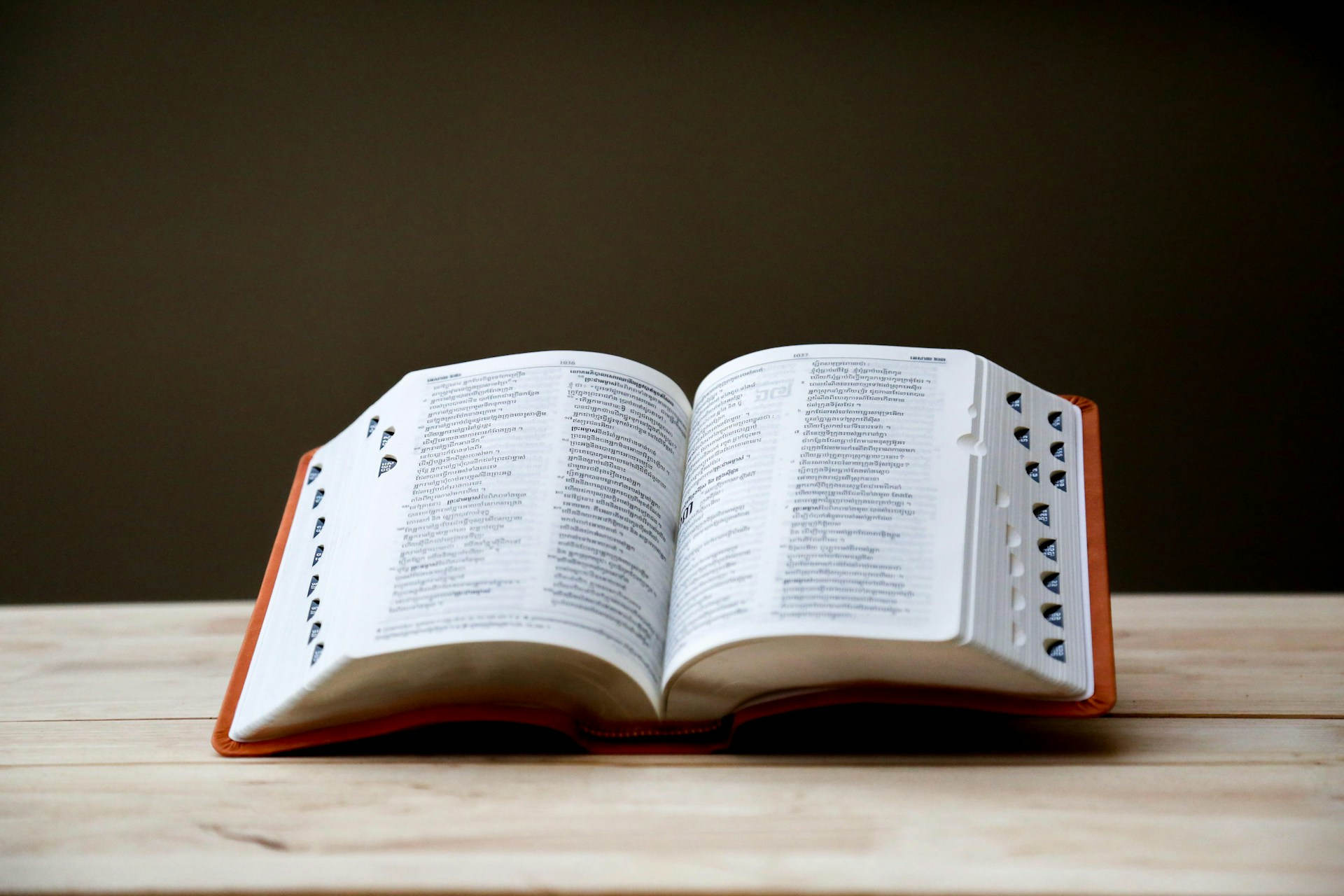
Have you ever stopped to think about how many types of dictionaries actually exist? You've probably thought about the classic dictionary you used in school, but the truth is that the world of dictionaries is much more diverse and fascinating than it first appears. From traditional dictionaries to the most specialized ones, each plays a fundamental role in language learning as well as in many professional disciplines.
We are often unaware that behind a single word lies a whole system of classification and a wide variety of resources tailored to the needs of different users: students, writers, translators, philologists, technical professionals, and, of course, anyone curious to expand their vocabulary. Let's delve into this fascinating universe and discover it together. all the possibilities and types of dictionaries that exist, how they are classified, and what each one is used for. You'll see there's much more behind those pages or screens full of words!
What is a dictionary?
A dictionary is a reference work, in book, electronic or web formatA dictionary is a collection of words, expressions, or terms, usually arranged alphabetically, accompanied by their meaning, usage, equivalence, or explanation. Some may also contain additional information such as etymology, pronunciation, usage examples, synonyms, antonyms, regional variants, as well as illustrations or encyclopedic data.
The dictionary is not only an indispensable tool for language students, but also a fundamental resource for writers, translators, proofreaders, teachers, and anyone interested in improving their oral and written communication. Its main function is to clarify doubts about the meaning, spelling, pronunciation, or even the correct usage of a word.
A brief history of dictionaries
The origin of dictionaries dates back to antiquity. The first lexical compilations appeared in Mesopotamiawhere cuneiform texts listing words in Sumerian and Akkadian have been found. In China, it already existed erya Dating from the 3rd century BC, it is considered the oldest monolingual dictionary. Meanwhile, figures like Philitas of Kos and Amarasimha laid the foundations for ancient dictionaries in Greek and Sanskrit. Glossaries and diverse repertories also developed in Japan, Persia, Ireland, and the Arab and Turkish worlds.
In Europe, the first major monolingual dictionary was the Treasury of the Castilian or Spanish language (1611) by Sebastián de Covarrubias, followed by Vocabolario dell'Accademia della Crusca (1612) in Italy and the work of Samuel Johnson in English (1755). These precedents have laid the foundations for modern dictionaries, both printed and digital.
Why are there different types of dictionaries?
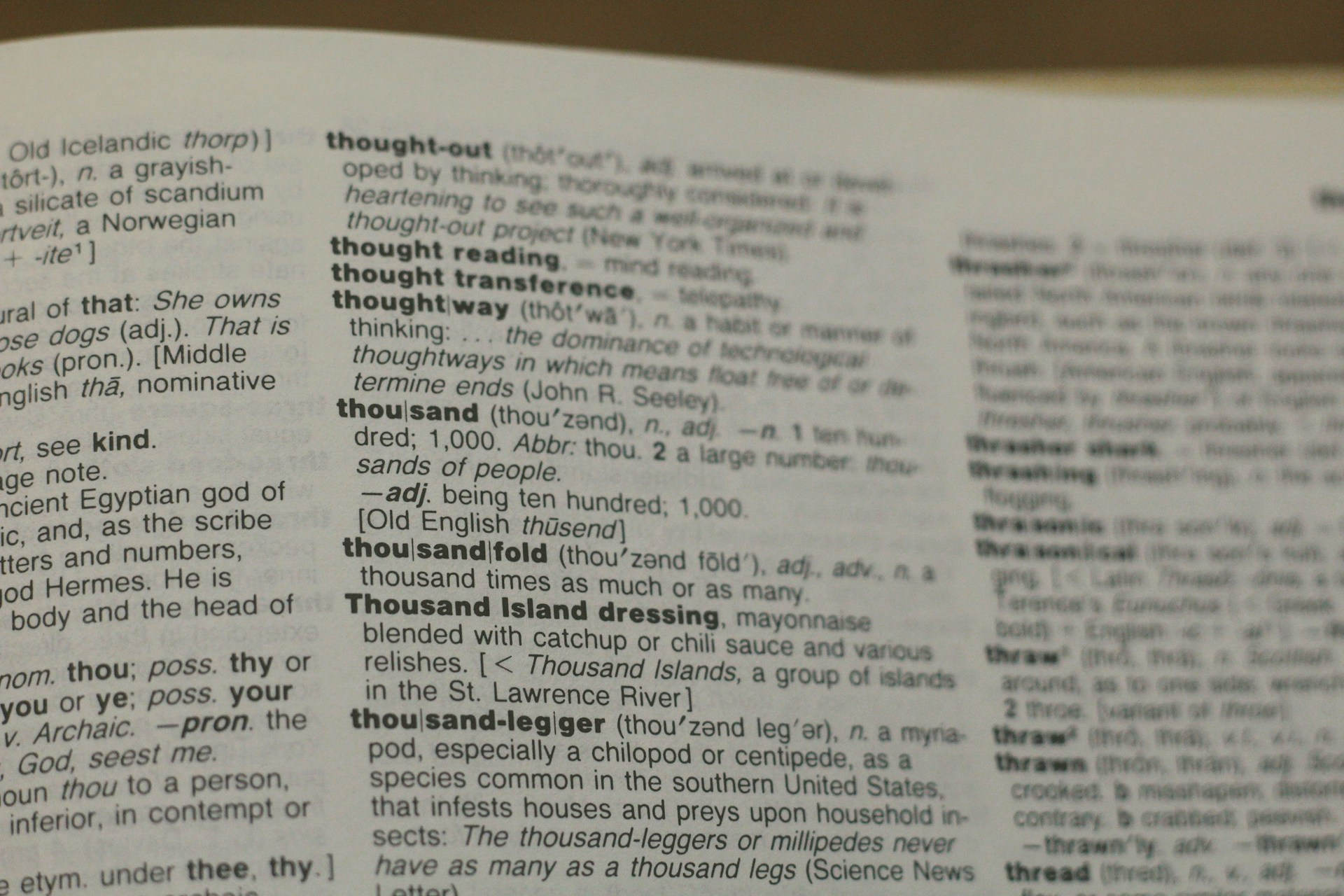
Not everyone looks for the same thing when consulting a dictionary. Sometimes we just need a clear and brief definition; other times, we're interested in the historical origin of a word, or we're looking for equivalents in another language. That's why There are numerous types of dictionaries, each adapted to specific needs.Furthermore, disciplinary development and specialization have led to lexicographical works for technical, scientific, linguistic, and other areas.
Classification can be based on function, content, structure, physical format, or target audience. Below, we present the main types and their characteristics, based on a thorough review of the most relevant sources on the subject.
General classification of dictionaries
We will look at a comprehensive classification, grouping the most important types of dictionaries according to their function, content, and semantic orientation.
1. According to their function and semantic orientation
- Semasiological dictionaries (from word to meaning): These are the most common methods. The user searches for a specific word, and the dictionary provides its definition, usage, grammatical category, etc. This is the traditional way to look up a word.
- Onomasiological dictionaries (from meaning to word): They allow you to start with an idea or concept and locate the different possible terms or lexical variations. They are very useful for those who want to expand their vocabulary, look for synonyms, or find specific words to express a particular nuance.
2. According to its content
This is one of the most common ways to classify dictionaries. Here are the main types:
- Lexical or language dictionaries: They compile the general vocabulary of a language, with definitions, usage, variations and, in some cases, synonyms, antonyms and examples.
- Bilingual or multilingual dictionaries: They facilitate the translation of words between two or more languages, showing the lexical equivalences between terms.
- Normative dictionaries: They include the words accepted as correct by official linguistic academies or institutions, establishing the standard usage and excluding (or indicating) the variants considered incorrect. The reference point for Spanish is the Dictionary of the Spanish Language of the Royal Spanish Academy (DLE).
- Descriptive dictionaries (for use): They reflect the language as it is used by speakers, including colloquial, regional, or popular usages, even if they contradict academic norms. Example: the Dictionary of Spanish Usage by María Moliner.
- Dictionaries of synonyms and antonyms: They group words with similar (synonyms) or opposite (antonyms) meanings, helping to write varied and precise texts.
- Etymological dictionaries: They offer information about the origin, evolution and history of words, their provenance and relationships with other languages.
- Ideological dictionaries: They organize vocabulary by semantic fields or families of ideas, not alphabetically. They start with general concepts or ideas and group all the words related to them.
- Dictionaries of doubt: They resolve common difficulties, confusions, and hesitations in language use (spelling, grammar, pronunciation, word usage, neologisms, loanwords, etc.).
- Encyclopedic dictionaries: They provide information beyond a simple definition. They incorporate historical, scientific, geographical, and biographical data, images, and references of all kinds related to the term being searched. A prime example: Wikipedia.
- Technical or specialized dictionaries: They compile terminology specific to particular areas of knowledge (computer science, medicine, engineering, gastronomy, politics, etc.), providing specific definitions adapted to the professional field.
- Visual dictionaries: They use images, illustrations, and graphics to show the meaning of words or concepts, making them very useful for children's learning, second languages, or specialized subjects.
- Reverse and rhyming dictionaries: They order words based on their ending or stressed syllable, facilitating the search for rhymes, lexical families or phonetic patterns, very useful in poetry and philology.
- Frequency dictionaries: They indicate which words are most commonly used in a language, with primary use in educational works and learning basic vocabulary.
- Gesture dictionaries: They record and describe the gestures and body expressions characteristic of a language and culture, providing information about non-verbal communication.
- Dictionaries of proverbs, expressions and idioms: They collect set phrases, idiomatic expressions, proverbs and sayings, explaining their meaning, use and origin.
- Biographical, historical or geographical dictionaries: They include proper names, data on relevant people, historical or geographical places, often integrated into encyclopedic texts.
- Dictionaries for learning languages: They adapt the content and explanations to the level and needs of the students, both native and foreign, with simple definitions, example sentences, syntactic and paradigmatic information.
3. According to the support
- Printed dictionaries (paper): The classic format. They are still useful, although increasingly displaced by digital versions.
- Digital or electronic dictionaries: These include web versions, mobile apps, CD/DVDs, and dedicated portable devices.
- Online dictionaries: They can be consulted for free on the internet, are updated more frequently, and allow for quick and advanced searches.
The rise of online dictionaries like the DLE from the RAE or collaborative projects such as the Wiktionary has democratized access to these tools.
Main types of dictionaries explained in detail
We will delve into each of the main types and some categories that often create confusion.
Lexical or language dictionaries
These are traditional dictionaries, in which The words of a language are collected with their meaning, spelling, pronunciation, grammatical category, senses and, in many cases, practical examples, synonyms, antonyms and variantsThey are usually organized alphabetically and are the most consulted reference by the general public. Dictionary of the Spanish Language (DLE) The one from the RAE is the most representative in Spanish.
Normative and descriptive dictionaries
It is important to distinguish between the two:
- Regulatory: They define and prescribe linguistic correctness according to official criteria. They usually exclude words considered incorrect or merely colloquial. They help people write and speak correctly according to current standard usage.
- Descriptive (usage): They do not judge correctness, but They record words and expressions actually used in the languageeven though they are not officially accepted. They showcase the richness of colloquial and popular language.
Both models can coexist, although their focus and purpose are different.
Bilingual and multilingual dictionaries
They facilitate translation between two or more languagesThey present the word in the source language and its equivalents in the target language, sometimes accompanied by example sentences, grammatical information, regional usage, etc. They are essential tools for language students, translators, and travelers. Bilingual (two languages) and multilingual (several languages) versions are available, both in print and digital formats.
Dictionaries of synonyms and antonyms
They serve to enrich vocabulary, improve written expression, and avoid unnecessary repetitions. They include lists of words that share similar (synonyms) or opposite (antonyms) meanings.sometimes differentiating nuances and contexts of use. They are especially useful for writers, teachers, and professionals seeking lexical precision.
Etymological dictionaries
They reveal the past of each word: They explain its origin, evolution, and the changes in meaning and form it has undergone over time.They allow us to trace loanwords, common roots, language relationships, and phonetic or semantic transformations. Highly valued by philologists, historians, and language enthusiasts. Classic example: Treasury of the Castilian or Spanish language by Covarrubias (1611).
Ideological dictionaries
They are very creative tools: They organize the words not in alphabetical order, but grouped by ideas, themes, or semantic fields.So, if you search for all the terms related to the emotion 'joy', you'll find them gathered and categorized by nuance. This approach focuses on meaning, not slogan, and is very useful for writers, poets, and creatives who want to associate related ideas and terms.
Dictionaries of Doubts
Do you have doubts about how to spell or use a word correctly? These dictionaries clarify the main hesitations, errors, or frequent confusions in the languageSpelling, pronunciation, accentuation, agreement, neologisms, semantic calques, etc. These are quick reference resources for solving everyday communication problems.
Encyclopedic dictionaries
They go beyond simply giving a definition: They provide expanded information on the term in question.including historical, biographical, geographical, and scientific data, as well as illustrations, diagrams, or maps. They are the abridged version of encyclopedias, but focused on explaining a term, not on the extensive development of a topic. Wikipedia is today the most emblematic example of an online encyclopedia, while dictionaries such as the Larousse They represent the traditional printed model.
Technical, scientific and specialized dictionaries
They compile the terms specific to a discipline or area of knowledgeThese resources cover a wide range of fields, including medicine, computer science, law, biology, gastronomy, engineering, and music. They provide detailed definitions tailored to the professional context, often accompanied by illustrations, diagrams, tables, or multilingual equivalencies. They are essential for both professionals and technical students.
Visual dictionaries
Much more than words: These dictionaries accompany each term or concept with images, graphics, or illustrations.They are usually organized by themes (the human body, the city, nature, etc.) and are ideal for children, language students (especially beginners) and for technical areas where the image clarifies the concept.
Reverse and rhyming dictionaries
Useful and interesting, They allow you to search for words based on their endings or stressed syllables.Reverse dictionaries order by the last letter or syllable, facilitating the search for rhymes or word families, while rhyme dictionaries refine the selection for poetic or musical creation. They are widely used by writers, poets, and linguists.
Frequency dictionaries
They reveal which are the most used words in a languageBased on large textual corpora, they are fundamental resources for language teaching, the development of teaching materials, and linguistic studies.
Dictionaries of gestures and nonverbal communication
In communication, words are not the only thing that matters. These dictionaries collect gestures, facial expressions, body movements and their meaning in a particular culture or language. They help to understand body language and avoid intercultural misunderstandings.
Dictionaries of proverbs, expressions and idioms
Specializing in fixed expressions and set phrases specific to the language, They explain the figurative or implicit meaning that often cannot be deduced directly from the words that compose them.They provide examples, regional variations, and context of use.
Didactic or learning dictionaries
Designed for students, They offer simplified definitions, example sentences, additional information on grammar, syntax, and often many illustrations.Adapted for both native speakers and those learning the language as a foreign language.
Biographical, historical and geographical dictionaries
They include entries on illustrious figures, geographical locations, or historical events, providing concise and relevant information, ideal for quick reference or study.
How is information structured in a dictionary?
Each entry in a dictionary (called motto) usually includes several parts, depending on the type of dictionary:
- Motto: The word or expression being defined, usually in bold.
- Pronunciation: Indication of how the term should be correctly pronounced.
- Etymology: Origin and historical evolution of the word.
- Grammatical category: Identify whether it is a noun, verb, adjective, etc.
- Definición: Explanation of the meaning or meanings (senses) that the word may have.
- Examples of use: Sentences that show how the word is used in context.
- Synonyms and antonyms: Words with similar or opposite meanings.
- Idioms or set phrases: Fixed expressions that include the searched word.
- Indications of use: Information about the context of use, regional variants, formal or informal registers, etc.
Not all dictionaries include all of these parts, but the most complete ones usually include many of them, which adds richness and context for the user.
Printed, digital and online dictionaries
Nowadays, Most dictionaries are available in digital formatThe advantages of electronic media over paper include constant updates, instant search, the inclusion of audio for pronunciation, and the ability to include images, links, and even videos. Furthermore, there are mobile applications, free consultation websites, and specific electronic devices that allow you to carry several dictionaries in the palm of your hand.
Even so, many people still value the printed format for its reliability, ease of reading, and lack of distractions.
Who uses dictionaries?
Virtually everyone, but its use is especially common among:
- Students for all levels, to expand vocabulary, improve expression and understand texts.
- Teachers and educators, as a teaching and educational planning tool.
- Translators, proofreaders and writers, in search of precision and expressive richness.
- Technical professionals who need to know the exact terminology of their area.
- Curious people, language lovers, and the general public, for pleasure, a thirst for knowledge, or a specific need.
The relationship between lexicology, lexicography and dictionaries
La lexicology It theoretically studies words (lexical units) and their systematic relationships in a language. For its part, the lexicography It is the applied discipline responsible for the creation of dictionaries, collecting, describing and ordering terms according to etymological, grammatical, semantic criteria, etc. Both complement each other, with lexicography being the practical materialization of lexicological knowledge.
Key differences between a dictionary and an encyclopedia
Un dictionary It offers brief and precise information about the meaning of words, focusing on their definition, usage, and occasionally additional information such as etymology or pronunciation. encyclopediaIn contrast, it develops the entries in depth, providing historical, biographical and cultural context, as well as detailed descriptions and bibliographic references.
Emblematic and recommended examples
- Dictionary of the Spanish Language (RAE-DLE): The reference for the Spanish language.
- Dictionary of Spanish Usage (María Moliner): Example of a descriptive dictionary.
- Salamanca Dictionary of the Spanish Language (Santillana): Educational, ideal for students.
- Spanish Dictionary for Foreigners (SM): Aimed at non-native students.
- Wikipedia: The largest online encyclopedia, constantly updated and collaborative.
The world of dictionaries is far more varied and useful than we generally think. Choosing the right type for your needs is key to getting the most out of these tools. Whether in print or digital format, dictionaries remain a fundamental pillar for learning, teaching, and effective communication. If you ever thought they were only useful for looking up meanings, you now have a more complete understanding of everything they can offer, whether you're a student, a professional, or simply someone eager to delve deeper into language and the world around you.