
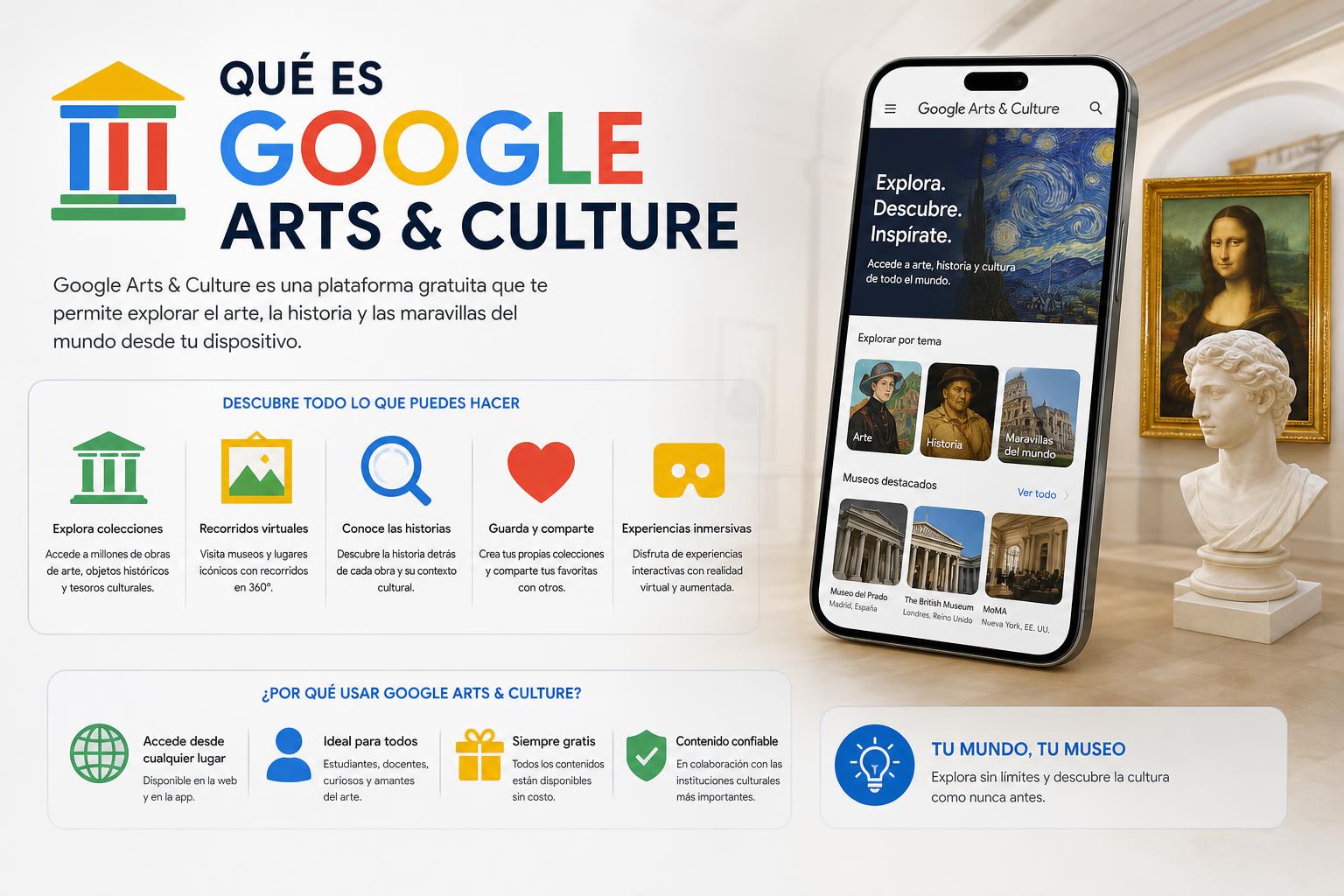
- Google Arts & Culture brings together more than 2.000 cultural institutions from around the world.
- It allows you to virtually explore exhibitions, works and museums from anywhere.
- It offers interactive tools, educational features, and high-resolution resources.
Discovering the world without leaving home is no longer just a fantasy thanks to new technologies. Today, anyone can immerse themselves in international museums, explore art movements, learn about historical events and important artists without spending a penny or planning a trip. Google Arts & Culture is the virtual gateway to global culture, a platform brimming with art, history, and science that is revolutionizing the way we discover and share our cultural heritage.
Have you ever wondered what it would be like to look at a Van Gogh painting in detail or stroll through Florence's Uffizi Gallery without leaving your living room? Google Arts & Culture is the online space that allows both enthusiasts and the simply curious to digitally access the work of museums, archives, and galleries around the world, experiencing culture like never before.
What is Google Arts & Culture?
Google Arts & Culture is a digital platform created by the Google Cultural Institute , with the aim of making humanity's artistic and cultural treasures accessible to everyone. It was launched in February 2011, initially featuring 1.061 works from 17 renowned international museums, such as Tate Britain in London, the Metropolitan Museum of Art in New York, and the Uffizi Gallery in Florence.
Following a relaunch in 2016, Google Arts & Culture expanded exponentially and today brings together more than 2.000 cultural institutions spread across more than 80 countries, offering millions of high-resolution images, virtual exhibitions, museum tours, and a multitude of resources for all audiences.
What is Google Arts & Culture used for?
This platform aims to facilitate access to art and culture from anywhere , eliminating physical, economic, and geographical barriers. It is the perfect tool for teachers, students, or anyone interested in expanding their knowledge and curiosity about world cultural heritage. Some of its main features are:
- Discover masterpieces from museums and archives around the world in an interactive and accessible experience.
- Explore digital exhibitions, thematic collections, historical sites and biographies of key figures who have shaped history.
- Conduct virtual tours to museums and sites declared World Heritage using Street View technology, allowing 360º tours of selected rooms and exhibitions.
- To understand technical and contextual details of artistic works, thanks to ultra high definition images and descriptions provided by experts and collaborating entities.
- Promote education and researchoffering a perfect platform for working on concepts of art, history, science and technology in the classroom.
Associated institutions and collections
One of the great advantages of Google Arts & Culture is the breadth and prestige of its partnerships . Currently, the platform brings together more than 2.000 partner institutions, including museums, galleries, archives, and cultural organizations from around the world. Some of the most relevant are:
- Musée d'Orsay (Paris)
- National Gallery of Art (Washington DC)
- Van Gogh Museum (Amsterdam)
- MoMA, Museum of Modern Art (New York)
- Rijksmuseum (Amsterdam)
- The State Hermitage Museum (St. Petersburg)
- The Metropolitan Museum of Art (New York)
- British Museum (London)
- Ibero-American Academy of Gastronomy (Madrid)
- NASA (Washington DC)
These collaborations provide access to private collections, historical archives, photographic archives, architectural heritage, and little-known treasures from diverse cultures. These range from collections of contemporary African art, such as The Pigozzi Collection , to NASA reports and documentary archives about the suffragettes.
What kind of content can I find?
The variety of digital content on Google Arts & Culture is impressive, bringing together millions of digitized pieces . You can discover paintings, sculptures, prints, historical objects, documents, photographs, and videos. It also features guided tours, virtual exhibitions curated by experts, and a thematic categorization system that facilitates navigation through:
- Artists (biographies, galleries and expert opinions)
- artistic techniques (descriptions, exhibitions, related works)
- Movements and styles (explanations and examples with timelines)
- Historical events (periods, episodes and specific exposures)
- Historical figures (world leaders, scientists, explorers, artists)
- Emblematic places (monuments, cities, cultural and natural sites)
This information is complemented by high-resolution images, educational fact sheets, multimedia galleries, educational resources and interactive tools, allowing for a personalized and immersive exploration.
Key interactive tools and features
Google Arts & Culture proves that it goes far beyond a simple visual gallery. It includes innovative tools designed for users to interact, learn, and personalize their experience :
- Art Transfer: transforms photos into the style of classic works.
- Art Selfie: Identify which portrait or character from universal art you resemble by uploading an image.
- Color Palette: Look for artworks that share the same color palette as any image you upload.
- Art Projector: Project life-size artworks using augmented reality with your mobile device.
- Pocket Gallery: Immerse yourself in mini-galleries to explore works up close.
- Art Camera: Examine ultra-high-definition images, appreciating every detail.
- 360° tours and virtual reality: Experience the feeling of being inside a museum through a 3D experience.
- Street view: Virtually visit museums, heritage sites and historic neighborhoods while moving freely.
- Art Recognizer: In specific museums, it identifies works by pointing the mobile phone camera at them, even without a connection.
In addition, you can save and group your favorite works , share them with friends or students, search for nearby museums, or receive personalized recommendations and instant translations of the content.
Education and Google Arts & Culture: an innovative teaching resource
One of the platform's main current uses is as an educational tool at various levels. Google Arts & Culture facilitates classroom work, promoting active, interactive, and visual learning to enhance understanding of art and history. The platform organizes its content into categories that are easily integrated into the curriculum, such as artist profiles with high-definition images of their works and pedagogical explanations, art movements, historical events, and much more.
Furthermore, the Street View exploration features allow students to take virtual trips to iconic landmarks, enriching their experience and facilitating content retention. In addition, it simplifies the search for nearby museums and cultural centers, providing useful resources for local projects or activities within the school itself.
On the main page, different sections such as "Featured Projects", "Relevant Stories" and "Exploration with Street View" offer additional resources and quick access to selected content to facilitate educational work.
How to collaborate and publish content on the platform
Google Arts & Culture not only invites users to explore, but also encourages the active participation of cultural institutions . Those wishing to share their heritage can request access as contributors at g.co/cisignup . This allows them to:
- Publish and digitize works from their collections
- Create expert-curated online exhibitions
- Participate in international projects
- Increase the visibility of your funds and activities globally
The process requires an invitation, but Google provides tools to digitize, manage, and present audiovisual content, historical documents, and interactive guides.
Main categories and how to explore the platform
To navigate Google Arts & Culture, both on the web and in the mobile app (available for Android and iOS), different categories and themes have been organized to facilitate searching and discovery. Among the most prominent are:
- artists: Biographies, galleries, and interesting details arranged alphabetically.
- Artistic techniques: resources on materials and procedures used in the works.
- Movements: Explanation of styles, trends and their chronology with examples.
- Historical events: relevant periods and events with multimedia content.
- Historical figures: Profiles of influential figures in culture and art.
- Places and museums: Digital tours that allow you to travel the world without moving, discovering World Heritage sites.
Each section features search tools and filters to delve deeper into preferred topics and personalize the experience.
Advantages for individuals, teachers and students
Google Arts & Culture provides specific benefits for each type of user:
- Individuals: unlimited access to culture, remote works and the possibility of sharing discoveries.
- Teachers: Adapted teaching resources, interactive activities and tools to enrich classroom learning.
- Students: Visual and experiential learning, multimedia resources and additional content to study and delve deeper into different cultural fields.
This environment democratizes access to art and culture, stimulating curiosity for knowledge and promoting cross-curricular learning in history, science, art and technology on a free platform.
Mobile app and new experiences
The Google Arts & Culture mobile app expands interaction possibilities, allowing users to explore exhibitions, search for nearby events or museums, save favorite collections, and take virtual tours from anywhere. Using artificial intelligence, it offers features such as:
- Recognition of works using the camera to identify pieces in physical museums.
- Instant translation of texts and descriptions in different languages.
- Customized tours based on the user's interests.
Its design is intended for audiences of all ages, allowing learning and enjoyment even offline in some sections.
Unique and collaborative projects on Google Arts & Culture
In addition to traditional content, the platform develops thematic initiatives and innovative projects in collaboration with cultural and academic institutions. Notable examples include:
- Connections with private collections, such as the Contemporary African Art Collection (CAAC), which exhibits more than 10.000 works of contemporary African art.
- Projects focused on diversity and inclusionwith exhibits on influential black figures and collections on social movements such as feminism and civil rights.
- Scientific and technological research, including NASA archives and virtual tours of archaeological sites and monuments in 3D.
New collections, commemorative exhibitions, and virtual tours are frequently added, designed to allow users to continue learning, being amazed, and exploring alongside experts and curators.
Security, privacy and access
Google Arts & Culture complies with international data protection regulations. For features such as recommendations, image recognition, and preference management, it may request location, camera, and storage permissions. Users can always adjust their settings and decide what data is shared.
Access to the platform is free on the web and in the application and does not require creating an account in most cases, although becoming a user allows you to manage favorites, receive recommendations and save visit histories.
How to start exploring?
To start using Google Arts & Culture, simply visit its official website or download its app on Android or iOS from the Google Play Store . Once there, you can browse collections, search for events, group favorite works, and explore exhibitions from the comfort of your home.
Thanks to collaboration with multiple institutions, Google Arts & Culture has established itself as the largest virtual showcase for the enjoyment, study and preservation of cultural heritage worldwide.