
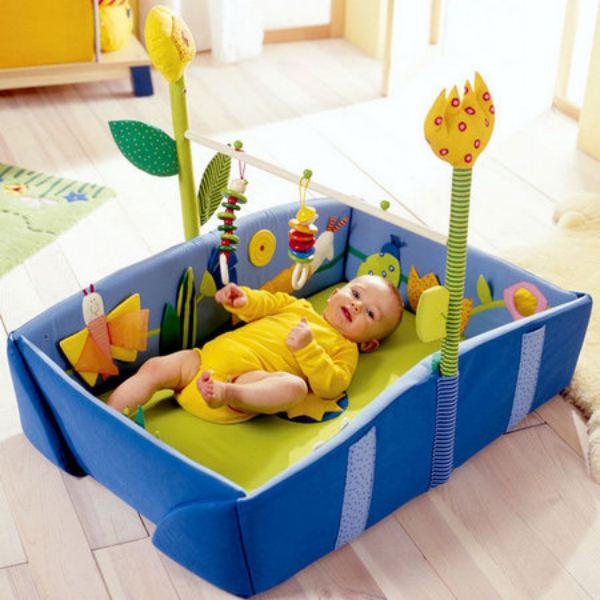
A series of recent studies have shown that babies see, hear, and learn long before birth, contrary to what was previously thought. It was once believed that newborns could not see, hear, or think. However, as has been demonstrated, the most rapid period of development takes place in the womb.
The first three months of life This constitutes the second fastest growth period. As soon as a baby is born, an intense process begins. learning process in all aspects of their development; cognitive, physical, psychological, emotional and social.
To make the most of this important period, we must keep in mind that during this stage, the child is beginning to learn about their environment and will do so through their senses. games and early stimulation activities They must be oriented according to the following criteria:
- It is necessary to strengthen the baby's neck muscles and promote head control.
- Develop the baby's senses (touch, hearing, sight, smell and taste).
- In the first three months, the baby can see objects at a distance of approximately 25 to 30 cm, and contrasting colors: white, black, and red are the ones that attract their attention the most.
- Remember that in newborns attention is involuntary, do not force them to play games.

You will be able to observe their progress through their reactions. The various games will allow you to balance and test your emotional skillsThe emotional atmosphere is therefore of vital importance during these first months.
To teach your baby to learn, you have to get involved, learn to observe them, get to know them, day by day, and offer them the necessary resources to encourage their curiosity and their desire to know how things work around them.
Below we propose a series of activities.
Activities for babies 15 days old:

Activities for babies 1 to 2 months old.

Sources:
- Teach Him to Learn. Mª. Luisa Ferrerós.
- The Origins of Intelligence in Children and Child Psychology. Jean Piaget
- ADRIAN, JE (2008). Child psychological development. Fundamental areas and processes. Castellón: Publications of the Universitat Jaume I, Universitas Collection 27.
- BERK, L. (1999). Child and adolescent development. Madrid. Prentice Hall Iberia.
- Images: www.facemama.com, www.pukllay.com, danielaestimulacion-1ao.blogspot.com, www.unomasenlafamilia.com,www.entrenamientovisual.com