Probably many of you, like me the three wise men They will have left you a book. The book that these three magnificent Wise Men wanted to leave me is titled Julieta. Juliet's Book (Grijalbo-Mondadori) does not belong to the epistolary genre. However, upon reading each of its brief chapters, we have the feeling of being the recipients of an intimate correspondence in which its author, Cristina Sánchez-Andrade, She specifically addresses us to share her relationship with her daughter, Down Syndrome, and the social environment.
These are observations, testimonies, and confessions in which each described event transcends the anecdotal threshold to reflect the authenticity of the feeling or reflection it fosters.
Fear, humor, tenderness, anger, love… are all captured in a fragmented yet concise and beautiful narrative. Page by page, we accompany Julieta in her daily life, witnessing the prejudices faced by disabled children and their families (even within healthcare protocols), and above all, Sánchez-Andrade's extraordinary writing evokes in the reader a feeling rarely found in contemporary fiction: empathy.

What is Down syndrome?
Down syndrome or trisomy 21 is a condition that is currently constitutes the genetic cause most frequent of intellectual disability and congenital malformations. It is the result of a chromosomal abnormality whereby the nuclei of the cells of The human organism possesses 47 chromosomes instead of 46, the extra chromosome belonging to pair 21. As consequence of this alterationThere is a significant increase in the number of copies of genes on chromosome 21, which causes a serious disruption in the expression program of a wide variety of genes, not only on chromosome 21 but also on other chromosomes. This genetic imbalance leads to alterations in the development and function of organs and systems, both prenatally and postnatally. Consequently, visible and diagnosable anomalies appear; some are congenital, while others may develop throughout life. The system more commonly The affected system is the nervous system and within it, the brain and cerebellum; for this reason, almost constantly the person with Down syndrome presents, to varying degrees, intellectual disability.
How is a child with Down syndrome different?
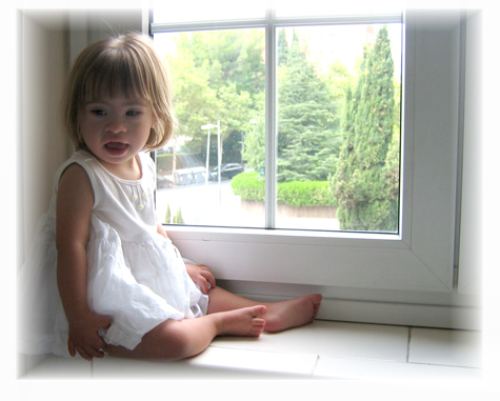
People with Down syndrome have more similarities than differences with typically developing individuals. Furthermore, there is a wide range of personality traits, learning styles, intelligence, appearance, obedience, humor, compassion, sociability, and attitudes among infants with Down syndrome.
Physically, a child with Down syndrome may have almond-shaped eyes and small ears that are slightly folded at the top. Their mouth may be small, making the tongue appear large. The nose may also be small and slightly sunken. Some babies with Down syndrome have short necks and small hands with short fingers. They are children with exceptional social intelligence.

Diagnosis.
Down syndrome can be diagnosed before or after birth. In the latter case, it is diagnosed using data obtained from a clinical examination and subsequently confirmed by karyotyping, that is, the arrangement of the chromosomes in the cell, which reveals the extra chromosome or the specific variant.
Prenatal tests can be screening or confirmatory. Confirmatory tests are usually only performed if there is a family history of genetic disorders, if the woman is over 35 years old, or if screening tests indicate a high risk of the fetus having Down syndrome. This partly explains why more than two-thirds of births with Down syndrome occur in women under 35.
Sources:
- http://www.sindromedown.net
- LIVING WITH DOWN SYNDROME: AN INTRODUCTION. by Various Authors.
- Images: http://blogs.cope.es,http://noticiasaudio.com, http://isahm.blogspot.com, http://www.crianzanatural.com ,http://parroquialjaen.wordpress.com, http://milka.nireblog.com, http://discapacidades47.blogspot.com